

Bronze Ware Represents China's Ancient Civilization
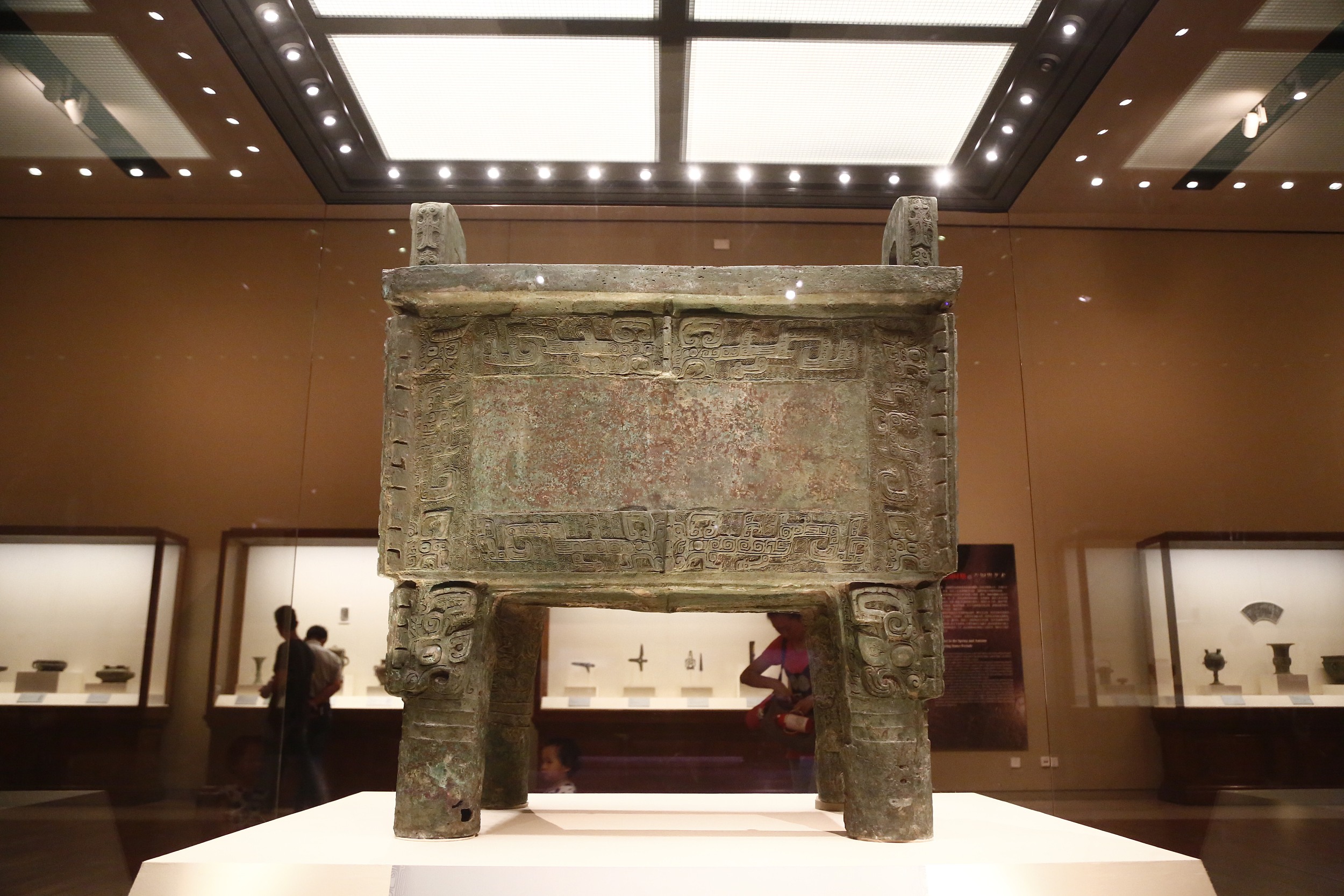
Houmuwu ding is on display in National Museum of China. (PHOTO: VCG)
Edited?by?BI?Weizi
The earliest known bronze in China is an almost 5,000-year-old bronze knife unearthed at the Majiayao cultural site in Dongxiang, Gansu province, which contains 6-10 percent tin and is thought to have been made by smelting. By the Xia Dynasty (2070-1600 BC), China had already started to use pottery mold and piece-mold castings to cast bronze wares, which developed into the Shang and Zhou periods (1600-256 BC), culminating in a large bronze ritual civilization unique to China.
Bronzes from the Shang and Zhou period in China, and those found in other civilizations around the world, mainly differ in the following ways.
First, in terms of volume, the Shang and Zhou bronzes are larger and more elaborate with sophisticated design and manufacturing process.
Second, in terms of function, most of Chinese ancient bronze artefacts are ritual forms rather than vessels and weapons made for practical use.
Finally, inscriptions on the Shang and Zhou period bronze objects, which describe reasons for casting certain vessels, as well as historical events, are of great value for historical and research purposes.
The largest and heaviest bronze ritual vessel ever unearthed in China, Houmuwu ding, along with the Four-goat Square Zun from the era of late Shang dynasty (about 1100-1000 BC) and the Da Ke ding from the Western Zhou dynasty (1046-771 BC), are typical representatives of the high-level craftsmanship and artistry of Chinese bronze casting.