

UNESCO Proposal Inspires Collaboration on Karst Research
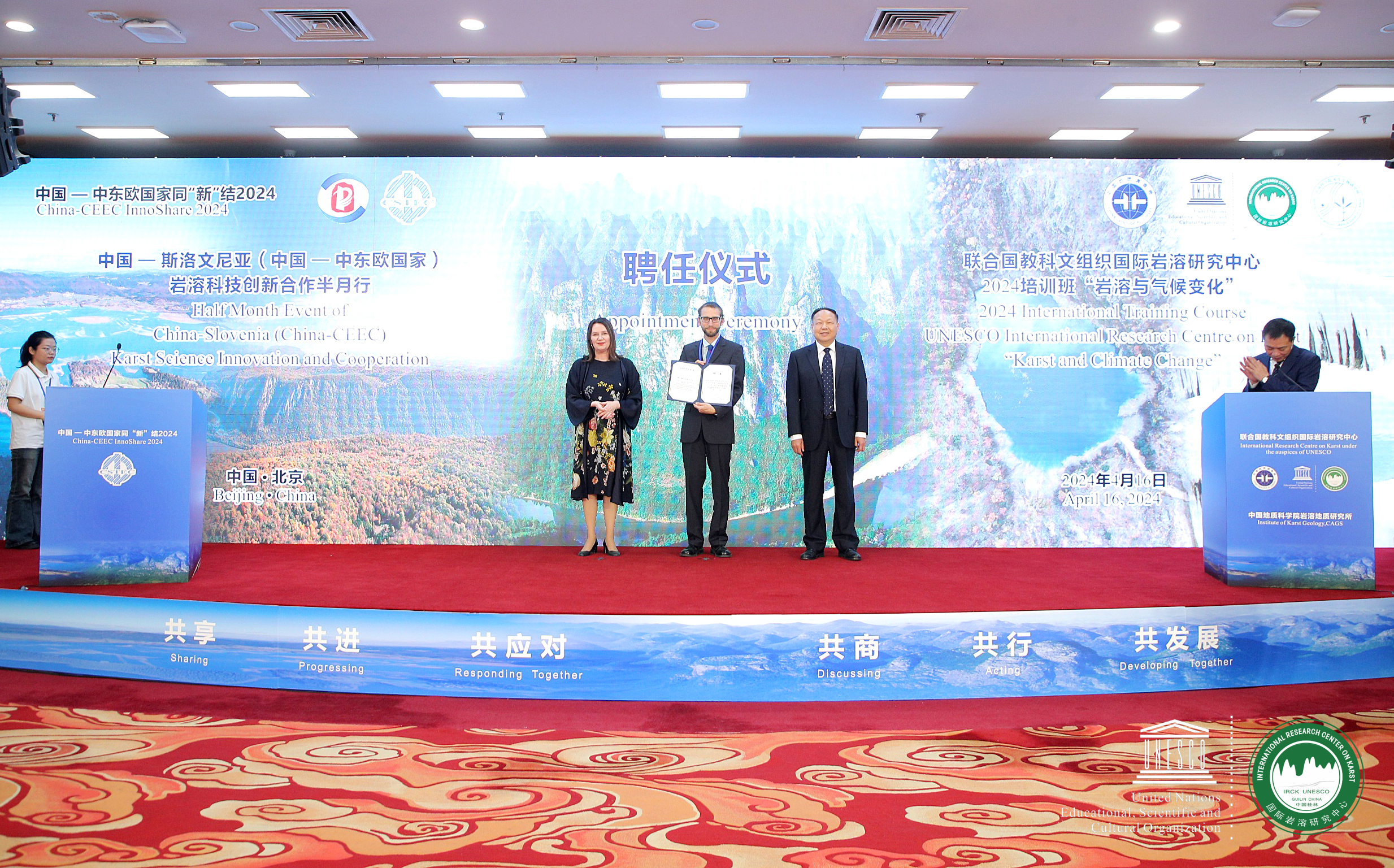
PHOTO:?CSTEC
By?Staff?Reporters
An initiative to promote global karst science and technology cooperation, urging all parties to strengthen exchanges and cooperation in karst geological research, was released by the International Research Center on Karst, under the auspices of UNESCO in Beijing on April 16.
This initiative, released during an event featuring China-Slovenia karst carbon cycle technology innovation and cooperation, aims to support global carbon cycling, mitigate geological disaster risks, and protect karst geological relics, promoting extensive collaboration and drawing up a blueprint for the future of karst science and technology innovation worldwide.
Karst is a landscape with distinctive hydrology and landforms that occur when the underlying rock is soluble. It originates from a karst plateau region in Slovenia, a limestone region renowned for its exposed rocks, caves and diverse formations. Karst covers about 15 percent of the Earth's land area, providing approximately 25 percent of the world's population with drinking water and boasting rich resources in water and minerals.
Gao Xiang, director general of the China Science and Technology Exchange Center (CSTEC), emphasized the importance of enhancing research on karst carbon cycling and its environmental effects. This effort not only contributes to the protection of global karst ecological environments but also provides an innovative path for human cooperation in addressing climate change, carbon reduction, and carbon neutrality.
China has been cooperating formally with Slovenia on karst research since the 1990s. Alenka Suhadolnik, ambassador of the Republic of Slovenia to China, highlighted their centuries-old tradition in karst research and over 30 years of collaboration with China, expressing hopes for joint efforts from scientists of both sides in nature conservation.
Prof. Dr. Shahbaz Khan, UNESCO representative to China, DPRK, Japan, Mongolia, and ROK, emphasized the role of karst landforms in carbon sequestration and maintaining ecological balance, stressing the continued efforts needed in this regard.
"This event, and the collaborations it fosters, like the China-Slovenia Joint Laboratory on Karst Geology and the Technical Committee on Karst under the International Organization for Standardization, are critical platforms for advancing our understanding and actions in these vital areas," he said.
The joint laboratory, initiated and supported by the Ministry of Science and Technology (MOST) in 2020, with joint effort from China and Slovenia, aims to promote global monitoring and research in karst regions through cooperation.
The event, hosted by the CSTEC, aims to create a platform for domestic and foreign innovative entities in the karst carbon cycling field. It was jointly organized by the International Karst Research Center of UNESCO and the Institute of Karst Geology, Chinese Academy of Geological Sciences.
The organizers of this event also introduced the Talented Young Scientist Program initiated by MOST in 2013, welcoming foreign youth to conduct research in China and promote the long-term development of karst science and technology with their innovative thinking.