

Beijing's Timeless Axis Becomes World Heritage
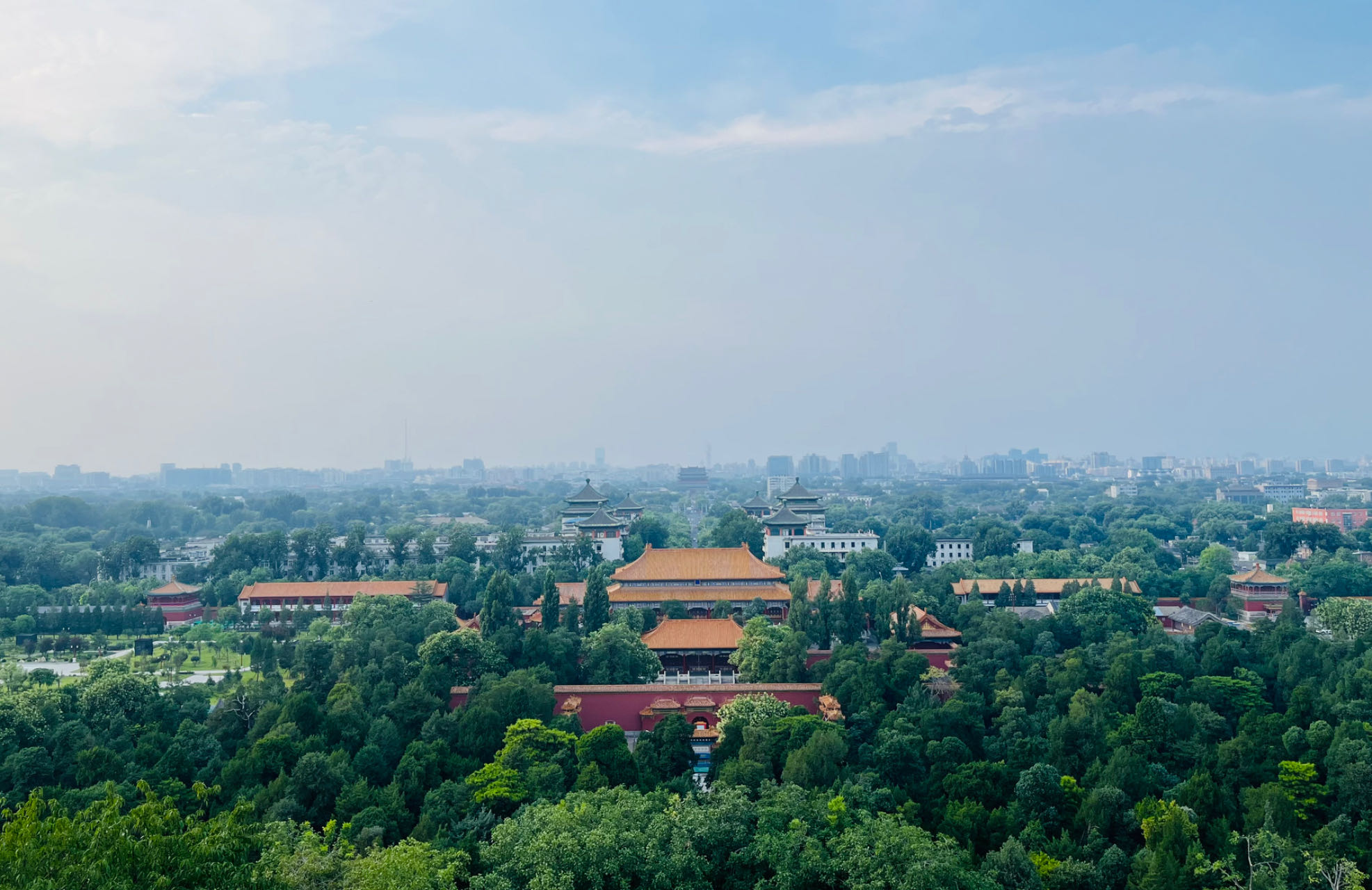
In 1951, Liang Sicheng, a renowned architect and scholar, applauded the Beijing Central Axis for its crucial role in defining the city's distinctive and grand order. In his article, "Beijing — the Incomparable Masterpiece of Urban Planning," Liang highlighted how the city's symmetrical layout and spatial organization were centered around this axis, significantly influencing the capital's architectural and urban design.
Seventy-three years later, on July 27, the Beijing Central Axis: A Building Ensemble Exhibiting the Ideal Order of the Chinese Capital, was inscribed on UNESCO's World Heritage List, becoming China's 59th World Heritage Site.
The Central Axis is a line of historical and cultural landmarks that runs through the heart of the capital. Its origin dates back to the Yuan Dynasty (1271-1368), when Dadu, the capital, was established. The Ming (1368-1644) and Qing (1636-1912) dynasties further enhanced this axis, aligning it with traditional Chinese principles of urban planning that emphasize harmony between heaven and earth.
The axis is a marvel of urban design, reflecting the ancient Chinese philosophy of balance and symmetry. Key landmarks along it include the Forbidden City, the Temple of Heaven, Tiananmen Square, and the Drum and Bell Towers. Each site holds deep cultural and historical significance, and showcases the architectural ingenuity of ancient China. The recognition will preserve and celebrate the axis's historical and cultural value for future generations.
Efforts to have the Beijing Central Axis recognized as a UNESCO World Heritage Site gained momentum in recent years. The application process began in 2012 with detailed documentation and conservation efforts, with the goal of meeting the criteria for World Heritage status by 2035.
The Central Axis is more than just a line of historical buildings, it is a living narrative of Beijing's evolution. It is a hub of cultural activities, historical explorations, and architectural marvels.
As history marches forward, the axis continues to embrace both its traditional heritage and modern advancements. The opening ceremony of the 2008 Beijing Olympics traced the Central Axis with 29 gigantic "footprints" of fireworks, symbolically leading to the Bird's Nest stadium. The axis, conceptually extended northward, becomes the Olympic Park Axis. This extension includes the National Stadium (Bird's Nest) on the east and the National Aquatics Center (Water Cube) on the west, further stretching through the Olympic Park to the Olympic Forest Park.
In 2022, Beijing became the first city to host both the Summer and Winter Olympics, with the Central Axis witnessing and contributing to this unprecedented honor. The newly constructed "Ice Ribbon" for the Winter Olympics, alongside the Bird's Nest and Water Cube, emerged as iconic landmarks on the Olympic Central Axis, reinforcing Beijing's symmetrical urban landscape.
In July 2022, the China National Archives of Publications and Culture situated at the northward central axis of Beijing, officially opened and became a new landmark of the line.
The Beijing Central Axis symbolizes China's enduring cultural legacy and architectural brilliance. Its recognition as a UNESCO World Heritage highlights its timeless value and the ongoing efforts to preserve its splendor for generations to come.