

Horse Collar Harnessing: Ancient Carriage Tech
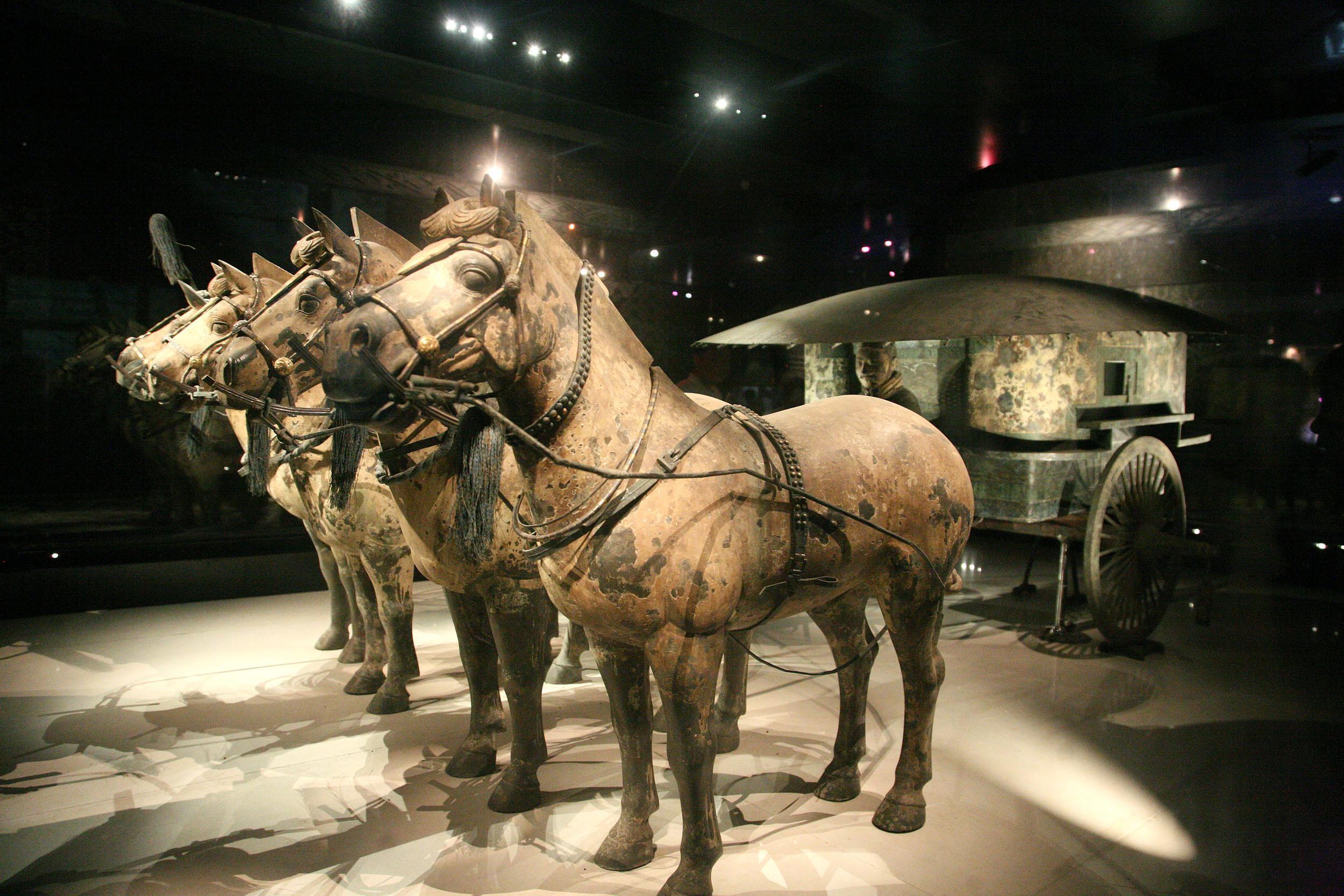
In ancient times, horse carriages served multiple functions, including transportation, military use and ceremonies. The history of the carriage goes back a long way, and as its design evolved, so too did methods of harnessing.
Harnessing is the method of attaching one or more horses to a carriage. An effective harness design utilizes the power of all the horses attached to their fullest potential, coordinating their efforts to pull the carriage, or mechanical device, more efficiently.
The world's earliest harnessing systems can be seen in chariots depicted in ancient Egyptian pharaoh tombs and temple murals. Horses were equipped with both a neck strap and a girth strap. The lead point was located where the two straps met, with the neck being the primary area through which the horse exerted force.
Western carriages often use a neck strap to connect the horse to the carriage, transmitting traction directly through the rigid strap. However, this method can place excessive stress on the horse's neck, easily causing breathing difficulties.
In ancient China, a painting on a 4th-century BC lacquerware box from the State of Chu shows the earliest known example of a yoke placed across a horse's chest, with straps connected to the chariot shaft. Gradually, the hard yoke was replaced by a breast strap, often depicted in carved reliefs and stamped bricks in Han Dynasty (202 BC — 220 AD) tombs.
The horse collar was eventually invented in China around the 5th century. This harnessing system was a key development in the history of carriage harnessing. The collar used a wide leather belt wrapped around the horse's chest as a traction point, which separated the fulcrum from the load point. This reduced localized stress and leveraged the horse's abdominal muscles, thereby improving the carriage's efficiency. This system was an improvement on the traditional yoke-and-reins method and predated similar Western techniques.