

Global Cooperation Needed to Accelerate Open Science
"We live in a world [where] we are interconnected and [with] more and more complex scientific challenges, therefore we need collaboration between scientists, especially know what the others are doing," Marcelo Knobel, executive director of The World Academy of Sciences (TWAS), UNESCO, told Science and Technology Daily in an exclusive interview. "So open science is fundamental for having access to the research done by everyone…International cooperation is an integral part of science."
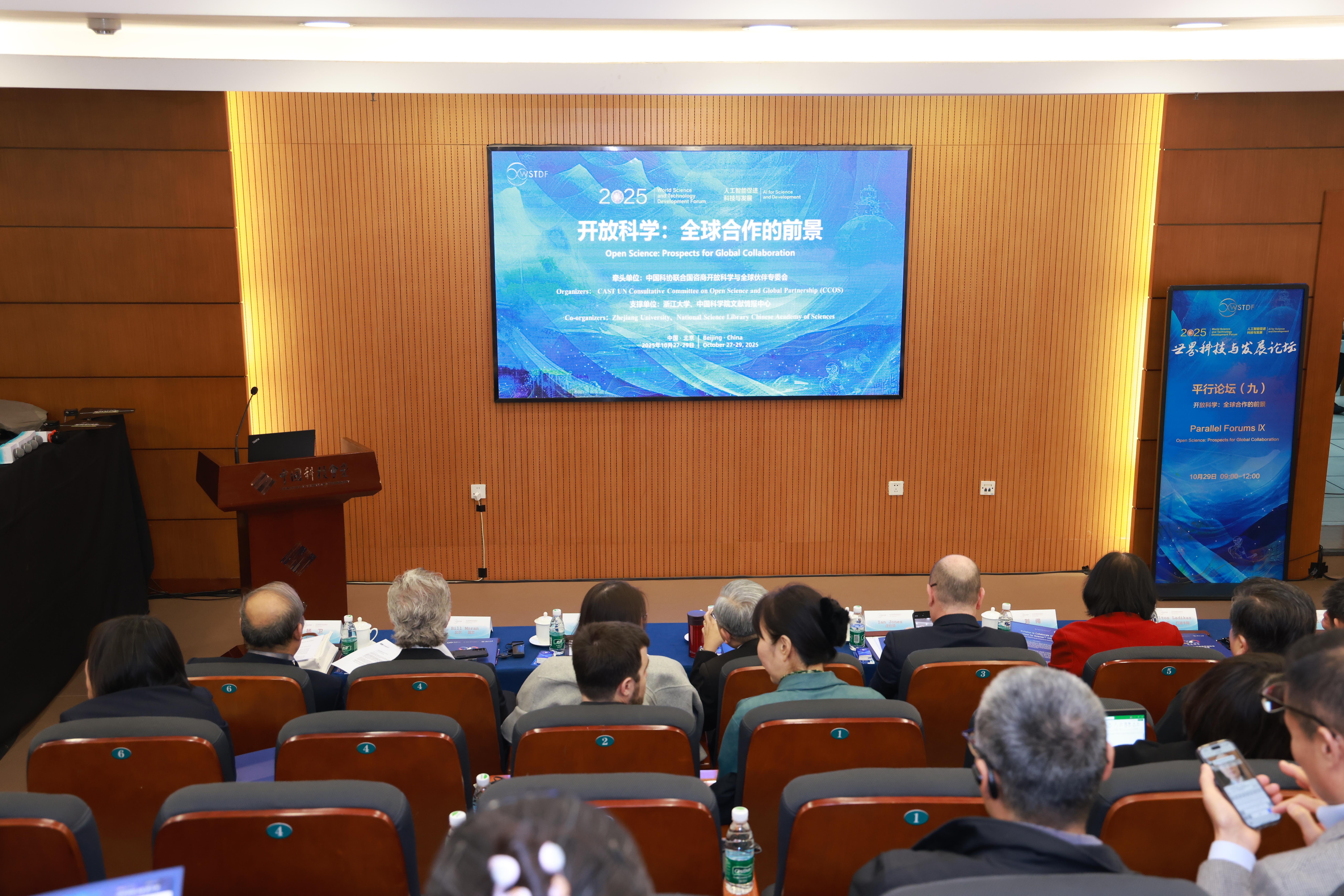
Knobel was speaking during Open Science: Prospects for Global Collaboration, a parallel forum of the 2025 World Science and Technology Development Forum, organized by the CAST UN Consultative Committee on Open Science and Global Partnership on October 29.
Open access to research relies heavily on scientific publishing, yet transforming the traditional system is no easy task. Representatives from renowned publishers including Science, Taylor & Francis, and PLOS all discussed the hurdles they face and the strategies they are adopting to transition from subscription-based models to transformative agreements. In this new model, academic institutions pay to publish research as open access.
Despite the challenges, the benefits are clear. Ian Jones, vice president and commercial lead, Asia Pacific at Taylor & Francis, shared a couple of figures in his keynote speech: open access output increased to 77 percent, in-year citations increased by 36 percent, policy mentions by 29 percent and news mentions by 115 percent after the transition.
"This is a great example of how transformative agreements can really accelerate equitable access," he said.
China has been very active in promoting open science. In November 2024, China, Brazil, South Africa and the African Union jointly launched the Initiative on International Cooperation in Open Science to strengthen global cooperation in science, technology and innovation.
On February 28 this year, the Executive Committee of UNESCO's International Decade of Sciences for Sustainable Development endorsed "Towards Open Science Infrastructure Sharing Network: China's Knowledge and Data Sharing Platform — Open for Science10," an initiative proposed by the Chinese scientific community.
Coordinated by the National Science Library, Chinese Academy of Sciences, the initiative was launched in June and the new platform Knowledge and Data Sharing Platform — "Open for Science" was launched during the parallel forum, seeking to build an open and shared infrastructure framework while narrowing enduring gaps in access to and use of scientific knowledge, particularly in countries and regions with limited capabilities.
"China has been doing a great job (in promoting open science)," Knobel said. He reiterated the importance of open science, saying science is intrinsically international and open science is fundamental to make the linkage between different ideas and perspectives from different parts of the world.
"Diversity is oxygen for science. So we really need more mobility and possibilities for all scientists to collaborate and contribute," he said.
His remarks echoed the forum's central message: Open science and global collaboration are essential to address the shared challenges of our time.