
T1400: A Push Towards Tonne-class Era of Low-altitude Equipment
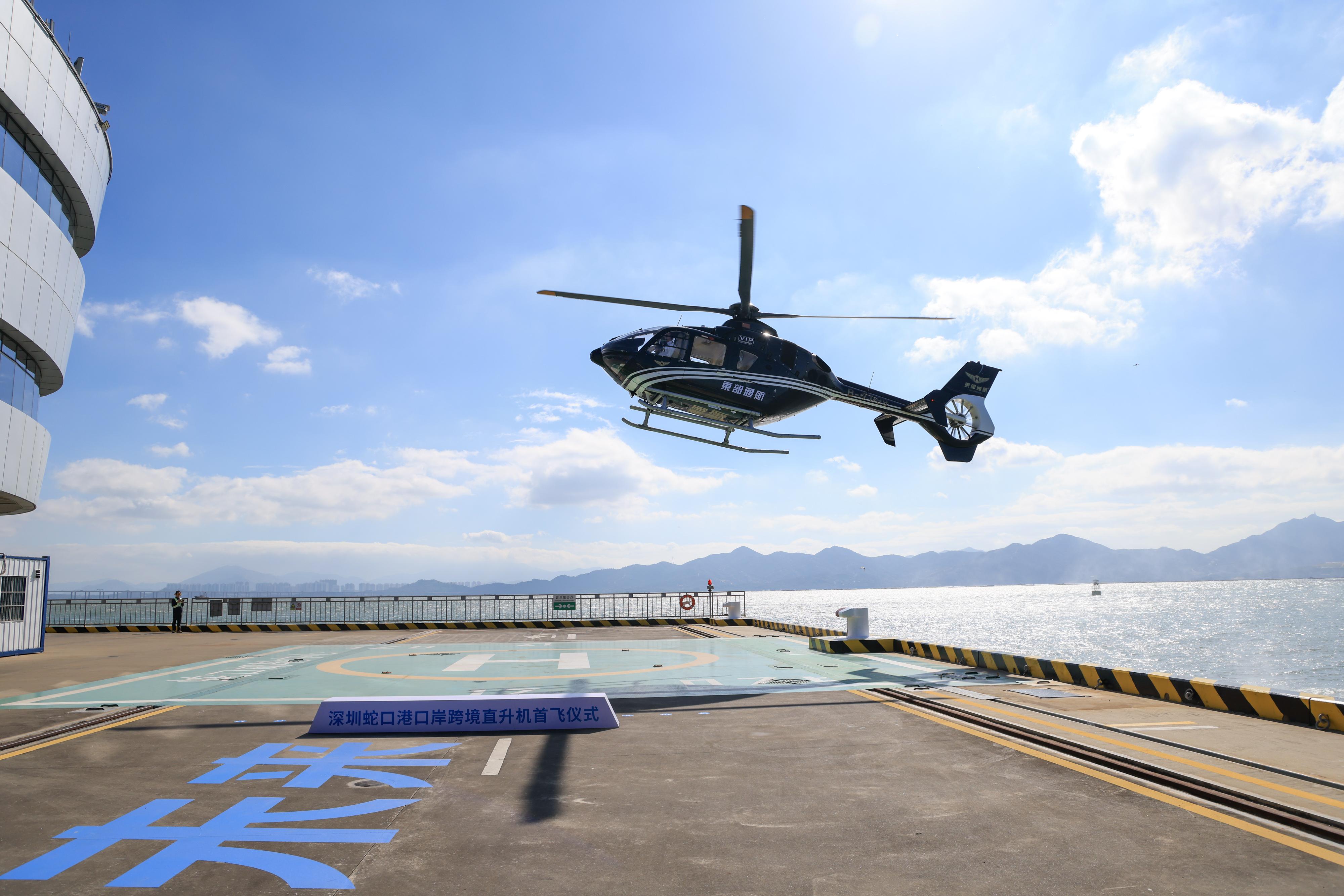
On October 30, the new unmanned helicopter Boying T1400 successfully conducted its first flight in the skies over Harbin, northeast China's Heilongjiang province. The T1400 is a heavy-lift unmanned helicopter developed by Harbin United Aircraft Technology Co., Ltd. With its powerful performance in payload, altitude, endurance and adaptability, the T1400 signals China's formal entry into the tonne-class low-altitude economy.
70 years of aviation heritage
The T1400's success is built on the foundation of more than seven decades of aviation expertise accumulated in Heilongjiang, one of China's earliest aviation industrial hubs. The province has built a complete ecosystem — from basic research to mass production — fostering generations of aircraft engineers and innovators.
With strong policy backing and a "green channel" support mechanism across provincial, municipal and district levels, United Aircraft's Harbin base achieved a remarkable feat: completing its large UAV industrial complex from groundbreaking to full operation in just one year.
Inside the intelligent factory, automated guided vehicles shuttle between digital production lines, transporting materials and equipment. The same base that mass-produces the Q100 agricultural drone has now given birth to the T1400 — a flagship product positioned to propel Heilongjiang's low-altitude economy toward the 100-billion-RMB scale.
Redefining UAV standards
Designed for extreme environments, the T1400 pushes the technological frontier of heavy-lift unmanned aerial vehicles (UAVs).
With a maximum takeoff weight of 1,400 kilograms and a payload capacity of 650 kilograms, it addresses a long-standing industry pain point — insufficient load and endurance.
The helicopter can fly over 900 kilometers carrying 200 kilograms of cargo, or operate continuously for more than eight hours, making it ideal for long-range missions.
Engineered to withstand temperatures from -40°C to 55°C, the T1400 can operate seamlessly across highlands and endure complicated weather in the northern part of the country. Its dual 130-kilowatt engine, redundant flight control system, and intelligent obstacle avoidance form a triple safety shield, ensuring reliability even in the harshest conditions. A "one-click takeoff and landing" function simplifies operation, lowering the threshold for use across industries.
These capabilities mark a breakthrough for China's aviation manufacturing, positioning the T1400 as a true representative of the nation's entry into the tonne-class UAV era.
Expanding application boundaries
The T1400's real strength lies in its versatility. In modern agriculture, it can conduct plant protection operations on 2,000 mu (One mu equals 666.67 square meters) of cultivated land per hour — nearly a thousand times that of manual operations — making it particularly suited to the vast farmlands of northeast China.
In logistics, the drone's ability to switch between internal cargo storage, external sling transport, and precision airdrop modes enables it to deliver up to three tonnes of supplies per hour within a five-kilometer radius, extending logistics coverage to remote mountain villages and plateau pastoral area.
If disaster strikes, the T1400 can transform into an airborne rescuer. Equipped with firefighting payloads, it can extinguish over 1,000 square meters of fire per sortie, while its medical module — complete with stretcher and oxygen system — allows two medics and a patient to be transported simultaneously. Whether in forest fires or flood rescues, it offers a powerful new tool for emergency response.