
The Super Fast Return of Shenzhou-21
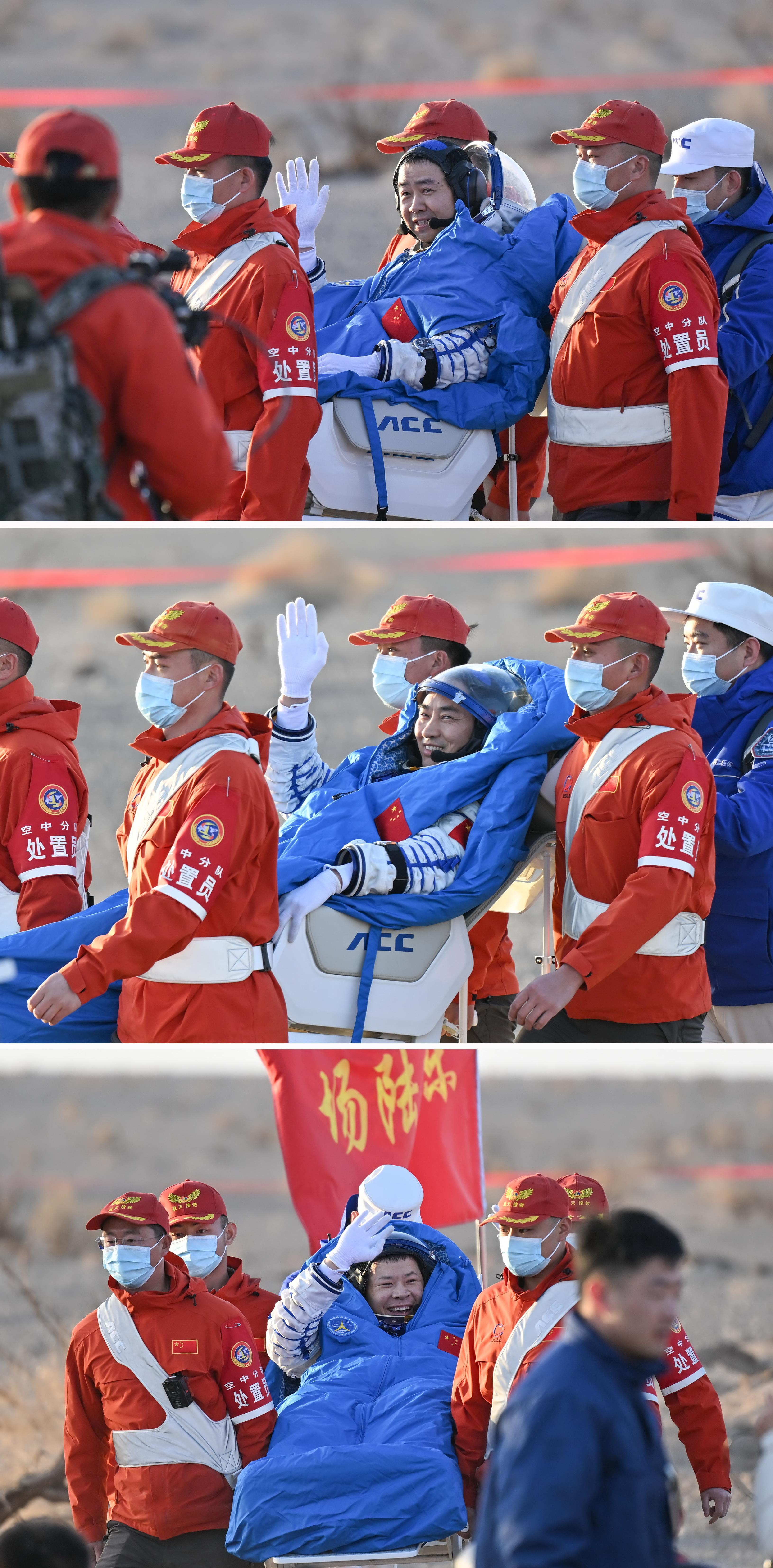
At 16:40 on November 14, the return capsule of the Shenzhou-21 manned spacecraft successfully landed at the Dongfeng landing site in north China. The spacecraft took less than 5.5 hours from separating from the space station assembly at 11:14 to landing, saving more than three hours compared to previous return missions.
According to the China Academy of Space Technology (CAST), the Shenzhou spacecraft successfully completed its first autonomous rapid return in three orbits, marking a breakthrough in China’s manned spacecraft re-entry and return technology, as well as demonstrating a new level of system reliability.
Reentry and return is the process in which a spacecraft deorbits and enters Earth's atmosphere after completing its space mission, landing safely in its target area. How is the spacecraft controlled during this process? Compared to previous return missions, how were the circles reduced from five to three? Experts from CAST provided explanations.
How is spacecraft re-entry and return controlled?
The Shenzhou spacecraft are developed by CAST. The guidance, navigation and control (GNC) system is the spacecraft's "intelligent pilot," playing a decisive role in typical rendezvous, docking and re-entry missions.
The reentry and return of the spacecraft are controlled through a combination of automated systems and manual commands from the crew or ground control. This involves an initial orbital braking maneuver to lower the spacecraft's orbit, followed by the separation of the service and orbital modules before the re-entry module enters the atmosphere.
During atmospheric entry, a controlled glide is performed to reduce g-forces, after which a parachute system deploys at an altitude of around 10 km, followed by a final soft landing using retro-rockets.
What are the key points in reducing the number of orbits from five to three?
In order to enhance the efficiency of the mission and the emergency response capabilities during the reentry phase, the research and development team at CAST designed an autonomous rapid return plan comprising three circles around the orbit.
The most significant change is that the deorbit control braking parameters are now calculated by the onboard computer rather than on the ground. To ensure the accuracy of these calculations, CAST's team conducted multiple rounds of verification and recalculation. This included checking the plan's accuracy, the flight procedure's rationality, the algorithm's accuracy, confirming the autonomous calculation results' correctness and validity, and reviewing the adjusted contingency plan. These steps ensure the spacecraft can return to Earth with high precision.
What is the significance of the three-orbit autonomous rapid return?
This significantly enhances the spacecraft's ability to handle major malfunctions during autonomous flight and combined spacecraft operations.
Compared to the previous return plan, the time from leaving the space station to returning to Earth has been reduced by more than three hours, demonstrating the stability and reliability of China's re-entry and return technology.
From Shenzhou-1's standard ballistic adaptive guidance to Shenzhou-12's adaptive predictive guidance and Shenzhou-21's rapid return after three orbits, Chinese aerospace engineers have forged a unique path for reentry and return technology over more than 30 years.