

Monetary Policies Back High-quality Economic Growth
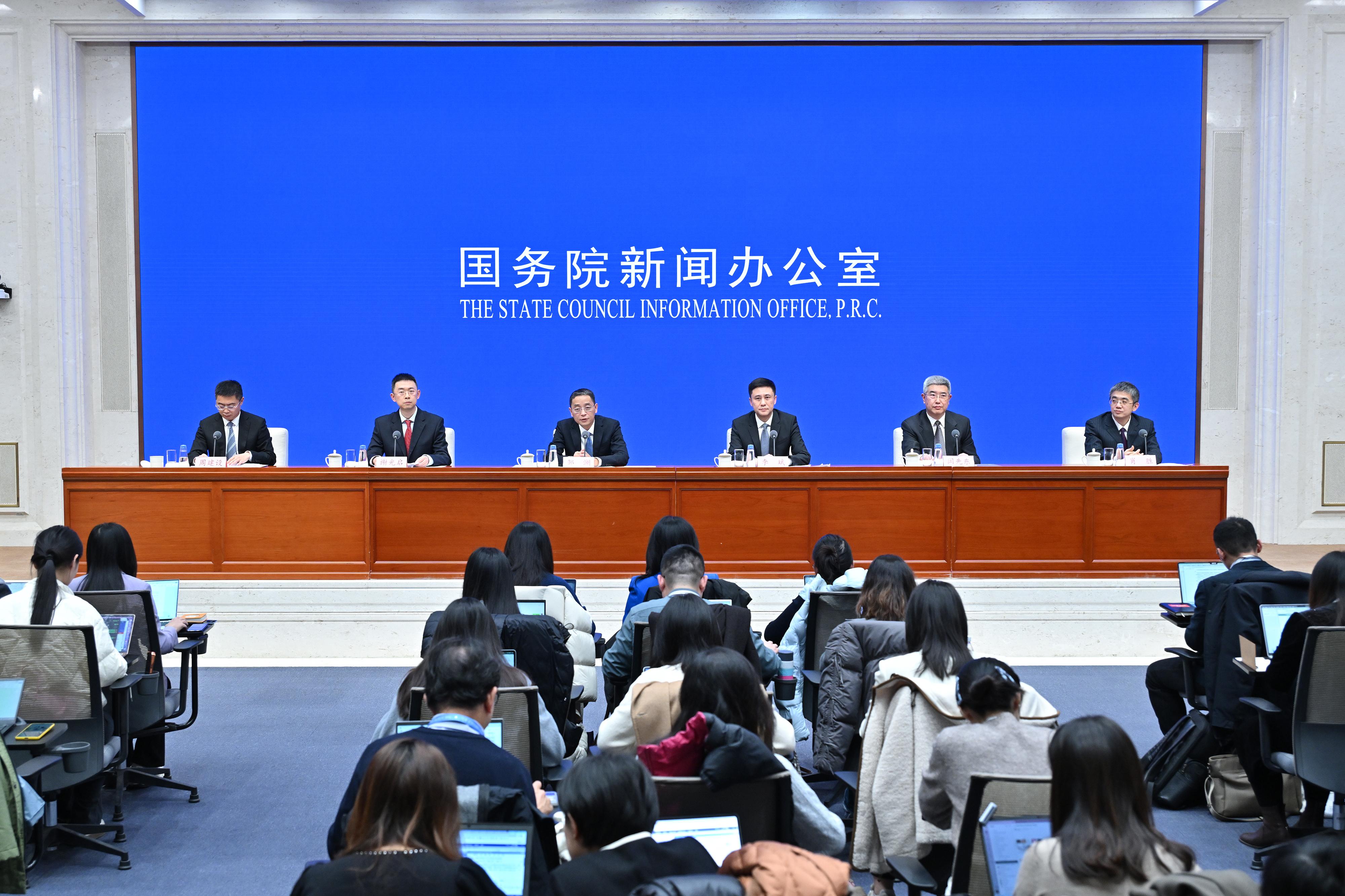
China's monetary and financial policies have delivered clear results in supporting the real economy, according to officials at a press conference held by the State Council Information Office on January 15.
Based on full-year financial data, the effectiveness of monetary and financial policies in supporting the real economy is evident.
The People's Bank of China (PBOC) announced that in response to evolving economic and financial conditions, it has expanded the quota for its relending program supporting technological innovation and industrial upgrading from 800 billion RMB to 1.2 trillion RMB.
The scope of eligible recipients has also been widened to include private small and medium-sized enterprises (SMEs) with high levels of research and development investment, further strengthening financial backing for innovation.
China's economic structure has continued to improve in recent years, with new growth drivers gaining momentum. In the first 11 months of 2025, the value added of high-tech industries above designated size rose by 9.2 percent year on year, making them a key engine of economic growth.
At the same time, financial support for technology continues to increase, while financing costs have significantly decreased. In November 2025, interest rates on newly issued loans in the technology sector and the digital economy were 0.32 and 0.51 percentage point lower, respectively, than a year earlier.
Loans in priority areas such as technology, green development, inclusive finance, elderly care and the digital economy all recorded double-digit growth, reflecting progress in advancing what policymakers describe as the "five key areas" of financial services.
To support green transition, the central bank has included projects with direct carbon-reduction effects — such as energy efficiency upgrades and low-carbon energy transformation — under its carbon emission reduction support tool. This tool is operated quarterly, providing one-year relending funds, with annual operations capped at 800 billion RMB.
Financial opening up and cross-border financing have also been enhanced. In 2025, China introduced more facilitative cross-border financing policies for high-tech, specialized and innovative firms and technology-focused SMEs, while launching pilot programs for green foreign debt. These measures have helped companies secure nearly 10 billion USD in financing to date, supporting green and low-carbon projects.
Support for the private sector has been reinforced. The PBOC has decided to establish a one trillion RMB relending facility dedicated to private enterprises, particularly SMEs and micro enterprises.
In addition, tools supporting technology innovation bonds and private enterprise bond financing have been merged into a unified risk-sharing mechanism, offering a combined relending quota of 200 billion RMB.
On the consumption side, policies continue to focus on expanding domestic demand. A 500 billion RMB relending program for service consumption and elderly care has already seen 118.4 billion RMB disbursed by the end of 2025.
Meanwhile, outstanding consumer loans — excluding mortgages — reached 21.2 trillion RMB by November 2025.
The authorities say further efforts will center on lowering financing costs, supporting employment and entrepreneurship, and meeting increasingly diverse consumer financing needs.