

China's Green Tech Drives Sustainable Development
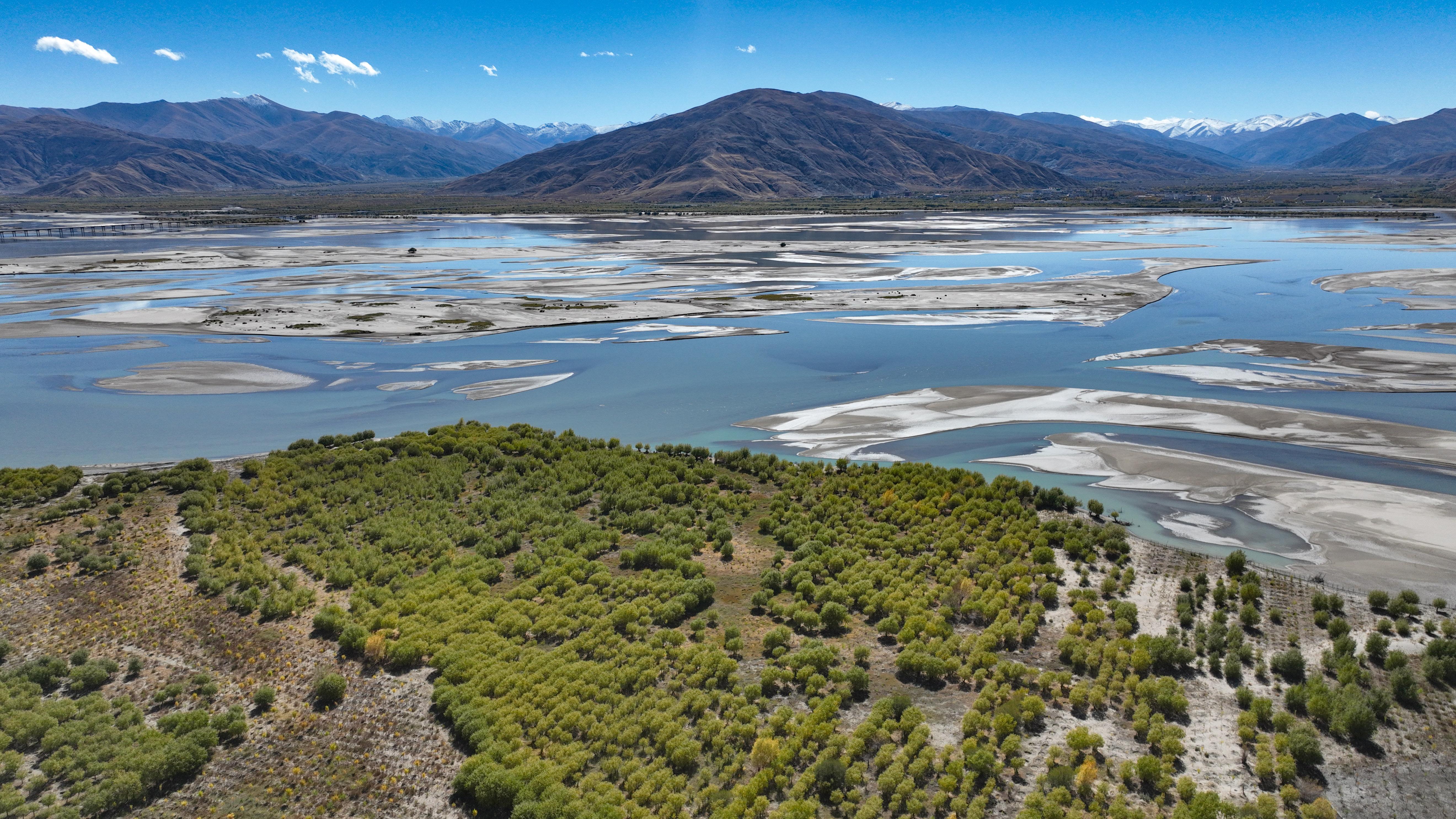
China has made remarkable strides in its green tech, with the global society applauding the endeavors and achievements made to promote sustainable development and improve people's well-being.
Decarbonization hand in hand with sustainability
According to Forbes, China is at the forefront of the global clean energy movement, investing nearly as much as the U.S. and the European Union combined. It is also leading manufacturing across most clean energy supply chains.
Climate Action Tracker reported that China now manufactures more than 80 percent of the world's solar panels, about 60 percent of the wind turbines, and roughly 75 percent of the lithium-ion batteries. The numbers reflect that dynamic. China accounted for roughly 39 percent of global energy transition investment in 2024.
"For too long, emerging economies have faced what seemed like a stark trade-off between growth and sustainability...China's green ascent challenges that assumption," energy think tank Ember said in its report. "Through scale, innovation and long-term planning, China is demonstrating that decarbonization can go hand in hand with industrial upgrading, job creation and improved quality of life."
As Neil Thomas, fellow on Chinese Politics at Asia Society Policy Institute's Center for China Analysis, wrote in an online article for The Wire China, the upside of China's clean-tech surge is clear: It is driving down the cost of decarbonization.
Pan Jiahua, professor at the Hong Kong University of Science and Technology (Guangzhou), told Carbon Brief that expanding demand for clean energy through mechanisms such as "green factories" represents an increasingly "bottom-up" and "market-oriented" approach to the energy transition. It will leave "no place for fossil fuels."
New frontier for sustainable development
According to APPN News, satellite imagery from NASA and other space agencies has confirmed that China's "Great Green Wall (GGW)," a tree-planting initiative launched by the Chinese government to combat the expansion of the Gobi Desert and restore degraded landscapes across northern China, is effectively slowing the advance of the desert, reshaping entire regions and creating a new, vibrant frontier where once there was only desolation.
This transformation has a profound impact on the local ecosystem, restoring biodiversity, improving soil quality, and providing new economic opportunities for the people living in the region. It's a testament to the power of human ingenuity and the resilience of nature.
According to the United Nations Convention to Combat Desertification, nearly a quarter of the world's land surface is now affected by desertification, putting the livelihoods and food security of millions of people at risk. The GGW is seen as a model for other countries to combat this crisis, using a combination of large-scale tree planting, sustainable land management, and community engagement.
Sheradil Baktygulov, director of the Institute of World Politics of Kyrgyzstan, has visited China multiple times in recent years. Recalling his observations in China, Baktygulov said many deserts have gradually been turned into green oases, and smog in cities has declined sharply, according to a Xinhua report.
Erik Solheim, former UN under-secretary-general and former executive director of the UN Environment Programme, said he was impressed by the transformation of Anji, a county in the eastern province of Zhejiang. Renowned as China's "bamboo county," Anji has over one million mu (about 66,667 hectares) of bamboo forests.
China's progress is significant for the world, Solheim added. Other nations can learn from China's approach that economic growth and ecological protection can go hand in hand.